

Room and suite pages
Show each category with its own photography, bed configuration, occupancy, facilities, inclusions and a clear route to check availability. Guests should not have to guess what separates a standard room from an executive suite.
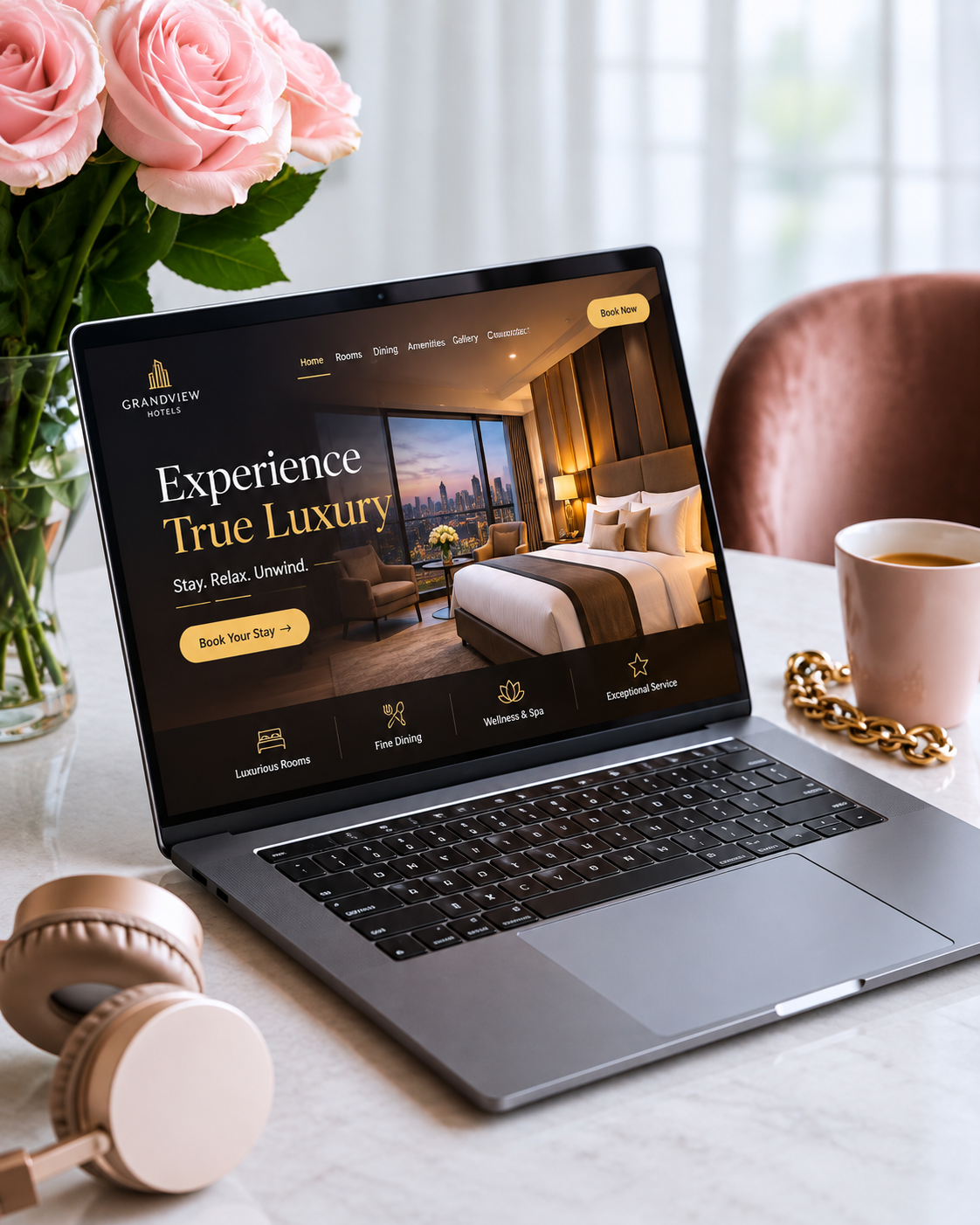
Your hotel website should do more than display attractive room photos. It should help a guest compare room types, understand your rates, check availability and reach a working reservation flow without having to call reception. G-Lab Studios designs hotel websites for independent hotels, city properties, resorts and conference venues in Kenya—with clear room pages, booking-engine connections, M-Pesa options where supported, and dedicated pages for events and corporate enquiries.
A leisure traveller comparing weekend rates has different questions from a procurement officer requesting a corporate rate or an event planner comparing conference halls. Your website should give each visitor a clear next step.
| What guests or organisers need | What the website should show | How we approach it |
|---|---|---|
| Room categories and ratesLeisure & business guests | Room photos, bed type, occupancy, amenities, inclusions and indicative rates. | Dedicated room-type pages with a visible availability or booking action. |
| Reservations and paymentsReady-to-book visitors | Dates, guest numbers, availability, cancellation terms and payment options. | Connect the website to your current booking engine or agree a custom booking scope. |
| Meetings and conferencesCorporate organisers | Hall capacities by layout, packages, equipment, meals and parking details. | Venue pages with capacity tables and a structured request-for-proposal form. |
| Weddings and group eventsEvent planners | Venue set-ups, event photos, guest capacity and package information. | Event-specific galleries and enquiry forms that capture date and expected attendance. |
| Dining, bar and wellnessIn-house & local visitors | Menus, opening hours, experiences, events and table-booking information. | Readable service pages with clear contact and reservation links. |
| Corporate and long staysCompanies & institutions | Corporate accommodation information, long-stay options and account enquiries. | A corporate page with a rate-request form and direct sales contact. |
Important: Room rates and availability should have one reliable source. We connect your website to your booking engine or channel manager where supported, rather than creating a second set of rates that staff must constantly reconcile.
A practical hotel website combines visual presentation with the information and workflows that help guests make decisions. These are the core sections we plan around your property.
Show each category with its own photography, bed configuration, occupancy, facilities, inclusions and a clear route to check availability. Guests should not have to guess what separates a standard room from an executive suite.
Connect the Book Now action to your existing reservation engine or channel manager. We assess the provider's integration options, branded booking experience and payment support before implementation.
Where your booking provider supports them, make it possible for guests to pay deposits or reservations using M-Pesa and bank cards. Gateway and transaction charges remain subject to the provider.
Give every hall a useful profile: capacity by theatre, classroom, boardroom and banquet layout, available equipment, day-delegate packages and a request-a-quote form.
Publish menus as searchable page content, not only as a PDF. Add opening hours, dining experiences, spa services, family facilities and links for table or activity enquiries.
Help visitors plan arrival with a map, directions, parking details, nearby landmarks, check-in information and answers to common questions about the property.
G-Lab does not require you to buy a booking engine from us. Our role is to design your hotel website and connect its reservation journey to the platform that fits your operation.
Integration depends on your provider, subscription and API access. We can assess platforms and workflows such as:
We do not promise that every booking platform supports every payment method or a full two-way integration. We confirm the provider's actual capabilities before quoting the integration.
A useful hotel website answers the questions that influence a booking: where the property is, what the rooms cost, what is included, how to get there and what else the hotel offers.
Prioritise room categories, weekday and weekend rate information, corporate accommodation enquiries, airport or town access, meeting rooms, Wi-Fi, parking and restaurant details. Make it easy for a business traveller or company administrator to request a rate.
Lead with the guest experience: pools, gardens, family facilities, dining, spa, nearby attractions, weekend packages and seasonal offers. Use galleries that show the actual rooms and shared spaces guests will use.
Show capacities by room layout, event set-ups, day-delegate and residential packages, catering options, equipment and parking. A well-planned enquiry form captures the date, guest count and event requirements.
Present rates and booking instructions clearly, explain payment and cancellation terms, and add language versions when you can provide accurate translations. Keep location, contact and arrival information easy to find on mobile.
Search visibility is not achieved by repeating “hotel website design Kenya” across every section. We structure the website around the searches and decisions that matter to your property, then make sure search engines can understand the pages.
We can plan useful location pages for the areas your hotel genuinely serves, including:
Each page should contain real property-specific information—not just a swapped town name.
A redesign should improve the route to a reservation without putting your existing search visibility or booking operation at unnecessary risk.
Room details are buried, rates are unclear, conference information is missing, the booking button leads somewhere unexpected, and large images make mobile pages slow.
Room categories are easy to understand, booking actions are visible, venue information is organised, and the mobile experience is tested from the first visit to the enquiry or booking hand-off.
For an existing website: We plan the page inventory, URL redirects, staging review and booking-path tests before launch. Search positions can still fluctuate after a redesign, so we monitor important pages and fix issues promptly.
How we take your hotel website from brief to launch:
We plan the website around your property's size and services. A typical hotel project may include:
We work with hospitality businesses that need a practical website to present their rooms, facilities and booking options.
Start with a clear scope. The final quote depends on the number of page types, content readiness, booking provider, payment requirements and any custom functionality.
Photography, paid booking-engine subscriptions, gateway charges, premium third-party licences and larger custom integrations may be quoted separately. We confirm inclusions before work begins.
Answers to common questions about cost, booking engines, M-Pesa, timelines and redesigns.
G-Lab hotel website projects start from KES 70,000 for a typical 10–20 page website. A custom booking module starts from KES 120,000 and is scoped separately. The final quote depends on page requirements, integrations, content and functionality.
Usually, yes. We first review your booking engine, PMS or channel manager and confirm the available integration method. In many projects, we can redesign the website and connect its booking actions to the system your hotel already uses.
M-Pesa can be supported through a booking provider or payment gateway that offers the required integration. Availability depends on the platform, account configuration and gateway. We confirm this before including it in the project scope.
A typical hotel website takes approximately three to four weeks once the required text, room information, images and feedback are available. Custom booking functionality or a complex redesign may take longer.
Yes. We can create dedicated pages for each venue, with capacity by seating arrangement, facilities, delegate packages, event photographs and enquiry forms for conferences, weddings and group events.
Yes. We build on WordPress and can provide an Elementor editing setup so authorised staff can update agreed content such as room descriptions, offers, galleries and announcements. Booking availability and live rates should continue to be managed in the connected booking system.
A redesign can affect rankings if URLs, content or technical settings change without a plan. We review existing pages, prepare redirects for changed URLs, test the new site before launch and monitor key pages afterwards. Search performance can still fluctuate during a migration.
Yes. G-Lab serves hotels in Nairobi, Ruiru, Thika, Juja, Kiambu Town, Ruaka, Limuru and other locations in Kenya. Project discussions and most website work can be handled remotely.